How to Manage Multiple Facebook Ad Accounts in 2026

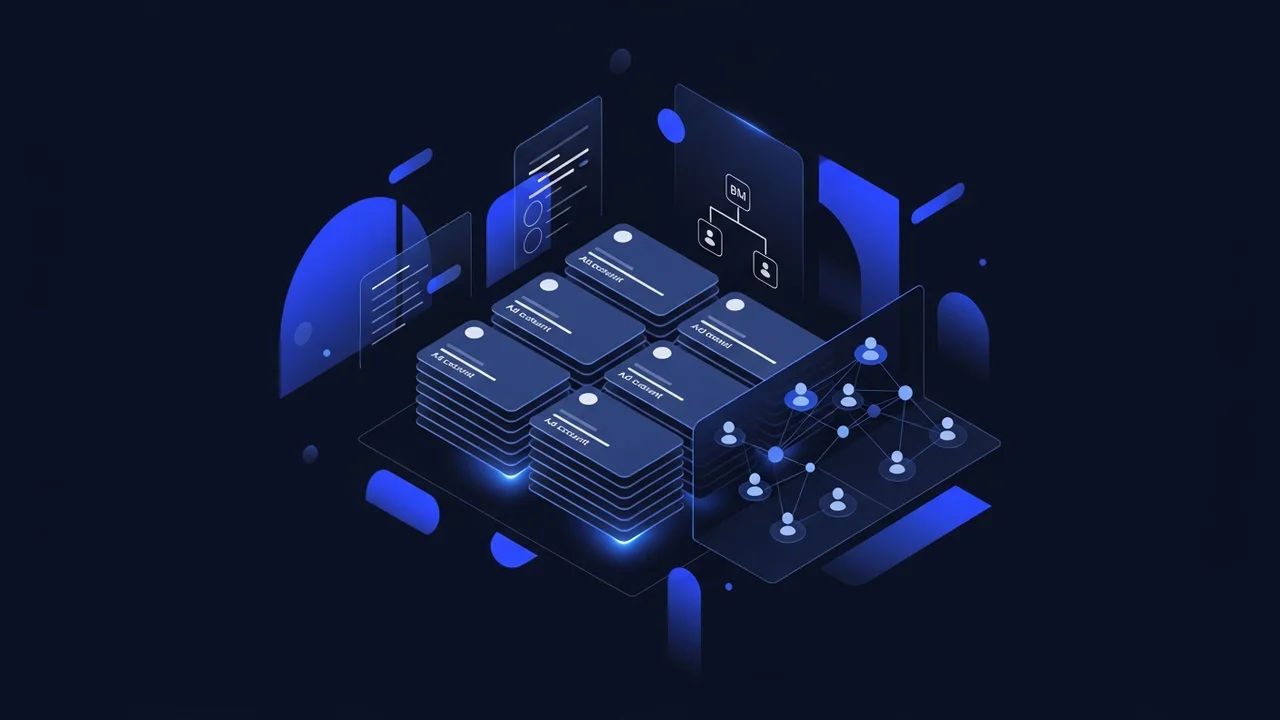

Running multiple Facebook ad accounts at scale is the standard for affiliate media buyers, agencies, and any DTC brand large enough to need redundancy. But Meta's anti-multi-account systems have gotten substantially smarter, what worked in 2023 will get every account in your portfolio banned in 2026. Here's the modern playbook.
The Three Pillars of Multi-Account Hygiene
Meta's risk system looks for three signals when deciding if multiple accounts are run by the same operator.
1. Browser fingerprint
Canvas hash, WebGL renderer, screen resolution, time zone, installed fonts, AudioContext signature, and 30+ other variables form a unique browser fingerprint. If two ad accounts log in from the same fingerprint, they're flagged as related.
2. IP address
Different accounts need different IPs from clean residential or 4G mobile pools. Datacenter IPs and free VPN IPs are blacklisted at scale.
3. Payment method
If two ad accounts use the same card or even the same billing address, Meta flags them as related, even if everything else looks unique.
The Right Tool Stack
- Anti-detect browser: One isolated browser profile per ad account. Each profile gets its own fingerprint, cookies, and storage. Top options: GoLogin, Multilogin, Octo Browser, Dolphin {anty}.
- Residential or mobile proxies: Static residential IP per account, ideally country-matched to the account's billing address. Avoid datacenter proxies.
- Separate payment methods: One unique card per account. Virtual cards (Privacy.com, Capitalist, Ramp) are the easiest way to scale.
- Cloud delivery for agency accounts: Pre-built isolated browser profiles delivered via cloud, removing the need to manage your own anti-detect setup.
- Centralized reporting layer: Tools like Triple Whale, Hyros, or a custom Looker Studio dashboard so you can see all accounts in one view without logging into each one.
Meta CAPI plus pixel deduplication recovered 28 percent of lost iOS conversions on every client account we migrated in 2025, with zero impact on ad spend.
Business Manager Structure for Scale
- Don't stack 50 ad accounts in one BM. If the BM is suspended, you lose them all.
- Group ad accounts by risk profile. Restricted verticals in their own BM, brand-safe accounts in another.
- Limit ad accounts per BM to 5-10. Beyond that, BM-level risk increases.
- Verify every BM you intend to scale on. Verified BMs have higher trust ceilings and better recovery options.
- Use system users for automation. Don't grant personal profile access for API integrations.
Daily Operations Discipline
- Always log into the same account from the same browser profile and the same proxy. Don't switch.
- Never copy-paste creative or audience CSVs across accounts in the same browser session.
- Don't log into multiple ad accounts in the same anti-detect profile, even briefly.
- Pay each account's invoices on time. Failed payments are the most common ban trigger across portfolios.
- Audit Account Quality weekly for every account.
- Maintain a kill-switch: if one account in a BM gets a strike, pause all other accounts in that BM for 24 hours to avoid cascade penalties.
Naming Conventions That Save Hours
- Ad account name format:
[Brand][Geo][Risk][Number], e.g., "ACME-US-Brand-01". - BM name format:
[Cluster]-BM-[Number]. - Campaign naming:
[Date][Geo][Funnel][Creative-Theme][Audience]. - Pixel naming: include the brand and date created, pixels accumulate fast.
- Audience naming:
[Type][Source][Window], e.g., "LAL-Purchase-1pct".
Multi-account ops is part discipline, part infrastructure. Get the browser-IP-payment trinity right, structure your BMs by risk cluster, and treat naming conventions like religion. Skip any of these and you'll spend more time recovering bans than running ads.
Want Pre-Built Multi-Account Infrastructure?
Unled Network ships agency-managed Meta accounts with cloud-browser delivery, residential IP isolation, and pre-attached virtual payment cards, multi-account hygiene done for you.
Step-by-step how-to
Start by auditing every account - map ownership, pixels, conversion events, and payment methods. Centralize access with Meta Business Manager and enforce role-based permissions so only named employees can create or fund accounts. Implement server-side conversion tracking - CAPI - for each account and deduplicate with pixel events to recover iOS attribution loss. Use unique pixels or subdomain namespaces per account to minimize cross-account signal bleed. Build an account warming plan - small spend, low-risk campaigns, and incremental scaling over 7 to 21 days. Standardize creative libraries and tag creatives by campaign objective, CTA, and UTM templates so you can rotate without repeating exact assets across accounts. Automate monitoring - set alerts for spend anomalies, frequency spikes, and quality score drops. Maintain a compliance binder with billing, client approvals, and ID docs for rapid verification requests. Finally, rehearse an account failure playbook - transfer assets, spin up backups, and pause risky campaigns immediately.
Common mistakes to avoid
Sharing a single payment method across many accounts is a fast path to mass flags - separate funding sources and use verified business payment profiles. Reusing the exact same creative and landing pages across accounts increases automated linkage risk - vary copy, assets, and domains. Overreliance on pixel-only attribution leaves gaps - pair with CAPI and server-side attribution. Granting broad admin rights instead of scoped roles invites mistakes and policy violations. Scaling too quickly without warming increases ban probability - grow budgets in stages. Ignoring early quality signals like CTR decline or rising negative feedback will escalate risk. Finally, failing to document account purpose, owner, and fallbacks makes remediation slow when a verification request arrives.
Quick comparison
| Factor | Option A | Option B |
|---|---|---|
| Ownership model | Agency-owned accounts - fast control, higher risk consolidation | Client-owned accounts - cleaner separation, slower setup |
| Tracking | Pixel-only - simpler but misses iOS signals | Pixel + CAPI - more accurate and resilient |
| Creative strategy | Single-creative pools - easy to manage, higher fatigue | Diverse pools - better longevity, more production cost |
| Scaling | Many small accounts - redundancy, operational overhead | Few large accounts - efficiency, higher single-point risk |
There is no perfect choice - most teams adopt a hybrid approach: client-owned billing, pixel plus CAPI, diverse creative pools, and a mix of account sizes to balance efficiency and redundancy.
Bottom line and next steps
Managing multiple Facebook ad accounts in 2026 requires rigorous hygiene - tracked ownership, server-side tracking, controlled access, and documented playbooks. Prioritize redundancy and slow, measured scaling while investing in creative rotation and monitoring automation. If you want a ready-to-deploy checklist and account-warming templates, join our community for operational resources and live troubleshooting on Telegram t.me/unlednetwork or WhatsApp wa.me/unlednetwork
Comments
Have a question or a first-hand experience with this? Join the conversation. Your email is never shown or shared.
Great article. Do you have any case studies showing the ROI of this approach?
Great question! This is something we see frequently with clients running how to manage multiple facebook ad . The key is consistency rather than a one-time fix.